Client
AURA - Concept Project
Role
Product Designer
Tools
Figma, Miro, Marvel
Year
2022 - 2023
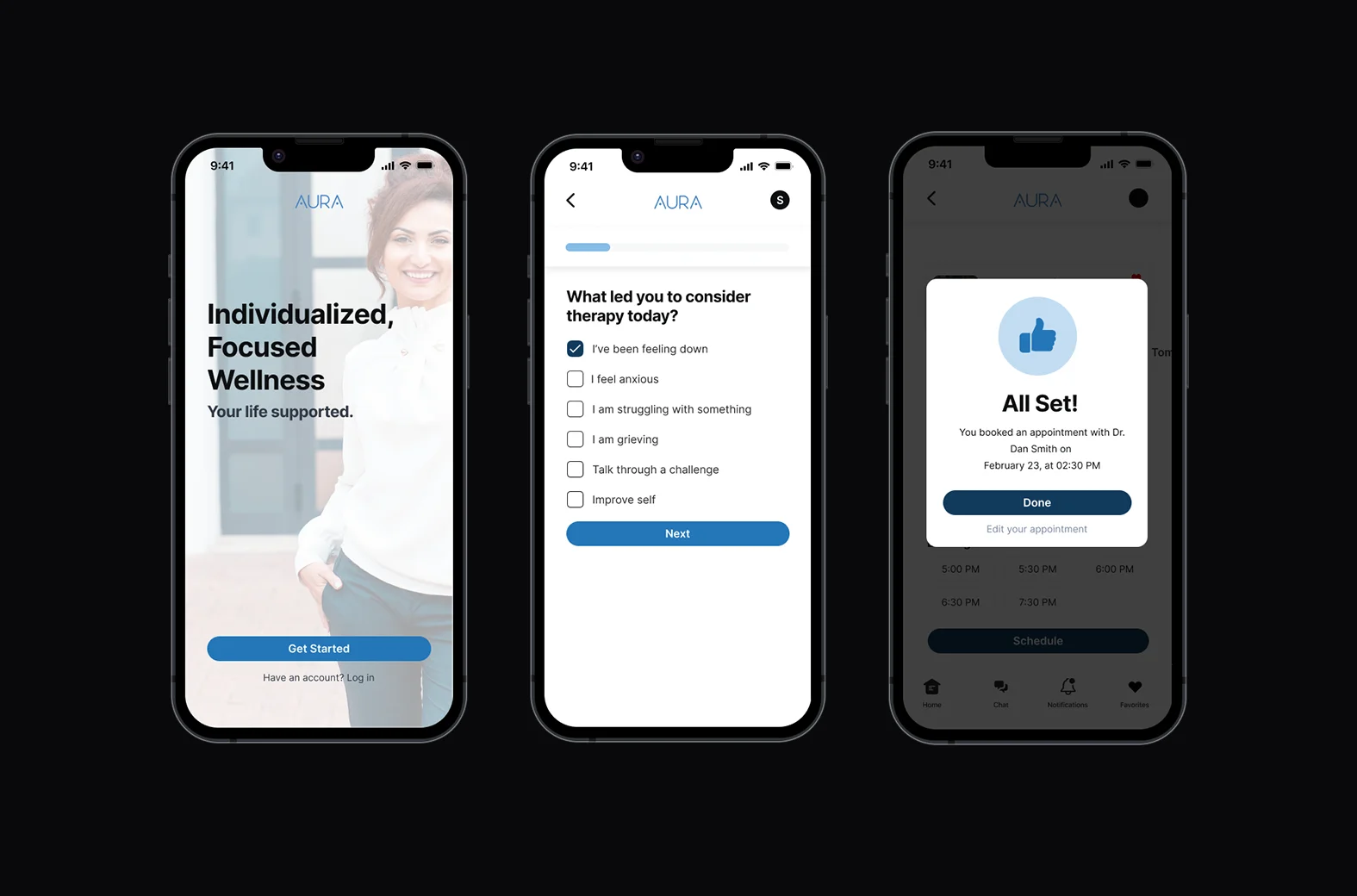
In this case study, discover how I reimagined employee wellness through the AURA Wellness App. As the product designer, I spearheaded the development of a holistic platform focused on mental health, aimed at enhancing workplace well-being and engagement. This overview highlights the user-centered research, strategic design thinking, and impactful solutions that shaped AURA, addressing unique challenges and setting a new standard for wellness in the workplace.
Challenge & My Role
Challenge: AURA faced a challenge in engaging and retaining users who might not naturally prioritize health initiatives. With mental health as a central focus, the goal was to build a workplace-friendly app that would foster wellness and productivity through accessible health support.
My Role: As the product designer, I was responsible for the entire design process, from initial research and ideation to prototyping and usability testing. This project was built from scratch, and my role involved synthesizing user needs into a product that could set the stage for improved workplace wellness.
Approach & Design Process
To guide the project, I used the Double Diamond methodology, breaking the design process into four key phases: Discover, Define, Develop, and Deliver. This structure allowed for a focused, iterative approach that kept user needs at the forefront.
Discover Phase
Research Foundation
I began by researching employee health interests, focusing on areas like mental well-being, physical health, and healthy diet practices. Understanding these aspects was important to forming a baseline for AURA’s goals, and it helped clarify assumptions about employee engagement with wellness programs.
User Research & Interviews
I conducted eight user interviews—exceeding the initial requirement of five—to capture a broad spectrum of insights. Questions like “What does health mean to you?” and “What contributes to your happiness?” helped reveal users’ unspoken priorities and personal connections to health.
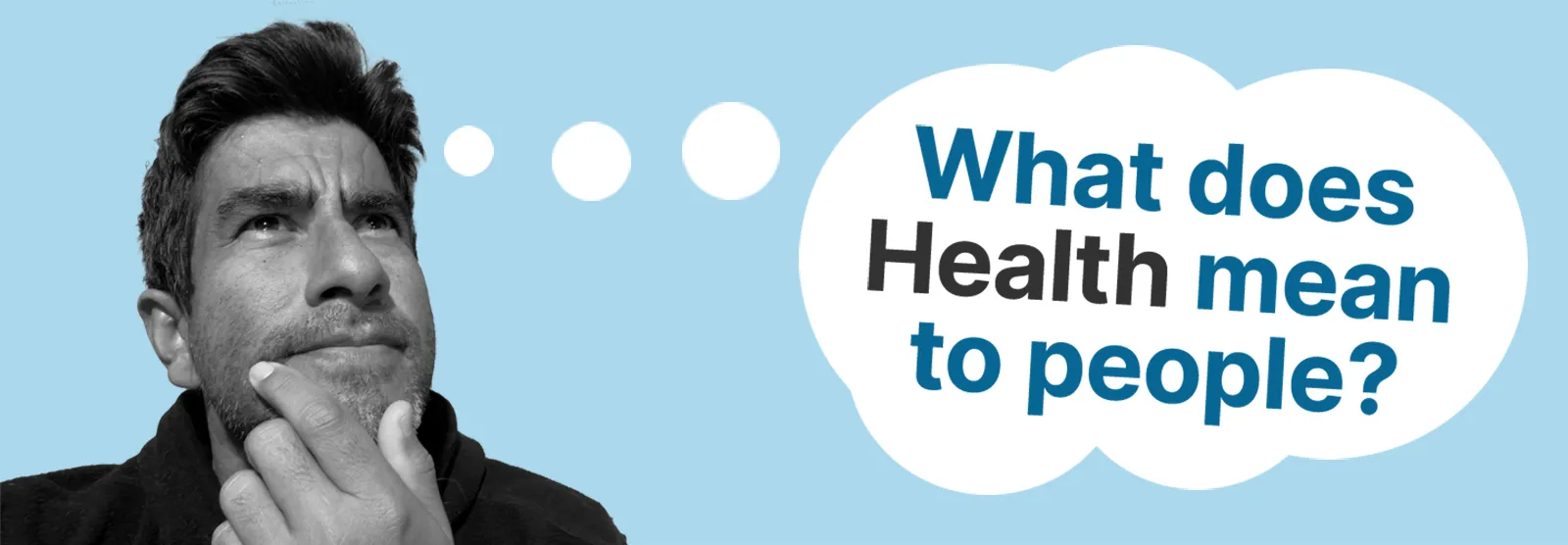
Key Insight: Mental well-being emerged as the dominant priority for users, which shaped our focus for AURA’s initial launch features.
Define Phase
Problem Statement
Employees face high levels of stress and anxiety due to financial and job-related pressures, and existing healthcare benefits often fall short in addressing these mental health challenges.
How Might We Questions:
How might we help employees feel comfortable using their mental health benefits?
How might we encourage employees to make healthier lifestyle choices?
How might we empower employees to prioritize mental well-being in their daily routines?
Develop Phase
Personas: Faces of AURA
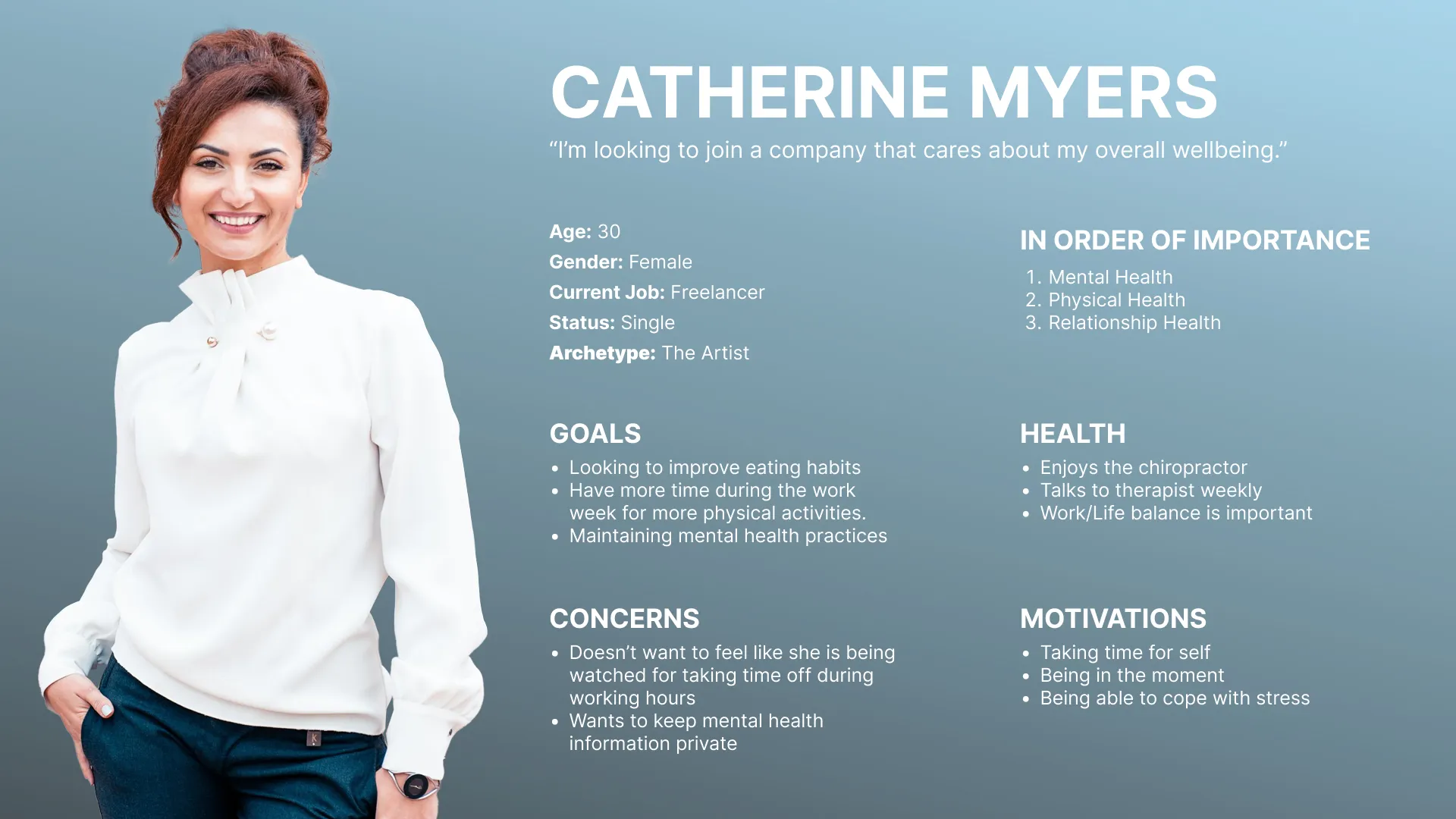
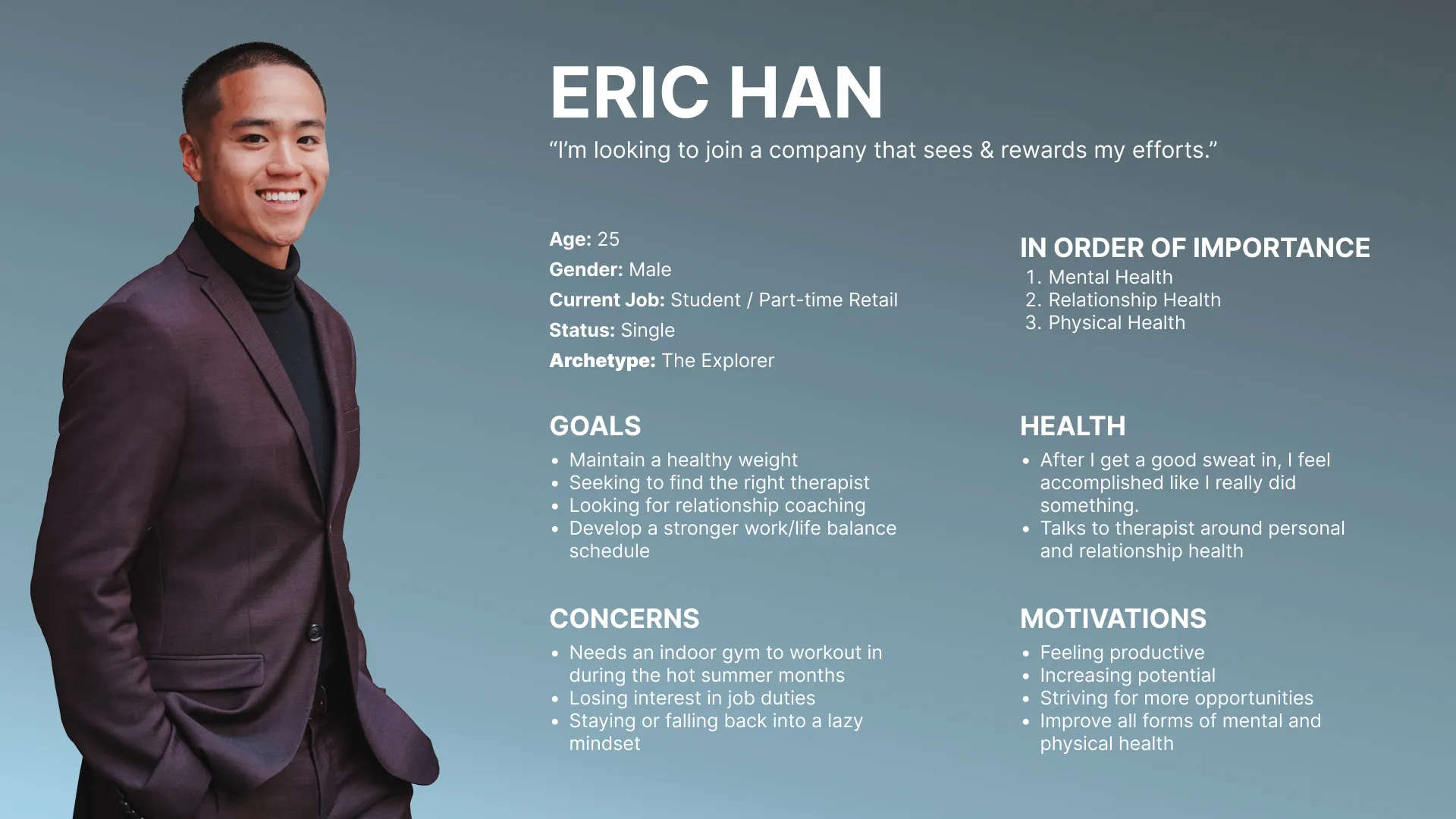
To keep user needs central, I developed personas representing two users: Catherine, a graphic designer from Maine, and Eric, a sports enthusiast from Arizona. Both shared a desire for a workplace that values mental health and a balanced lifestyle.
Persona Highlights:
Catherine seeks an employer who respects her mental health boundaries and provides resources for holistic well-being.
Eric looks for work-life balance and opportunities to engage in wellness initiatives that align with his athletic interests.
Task Flows & Wireframes
I created task flows to streamline user journeys, such as logging in, finding a therapist, and scheduling appointments. These flows laid the groundwork for creating a simplified, user-friendly experience that would guide users intuitively through each interaction.
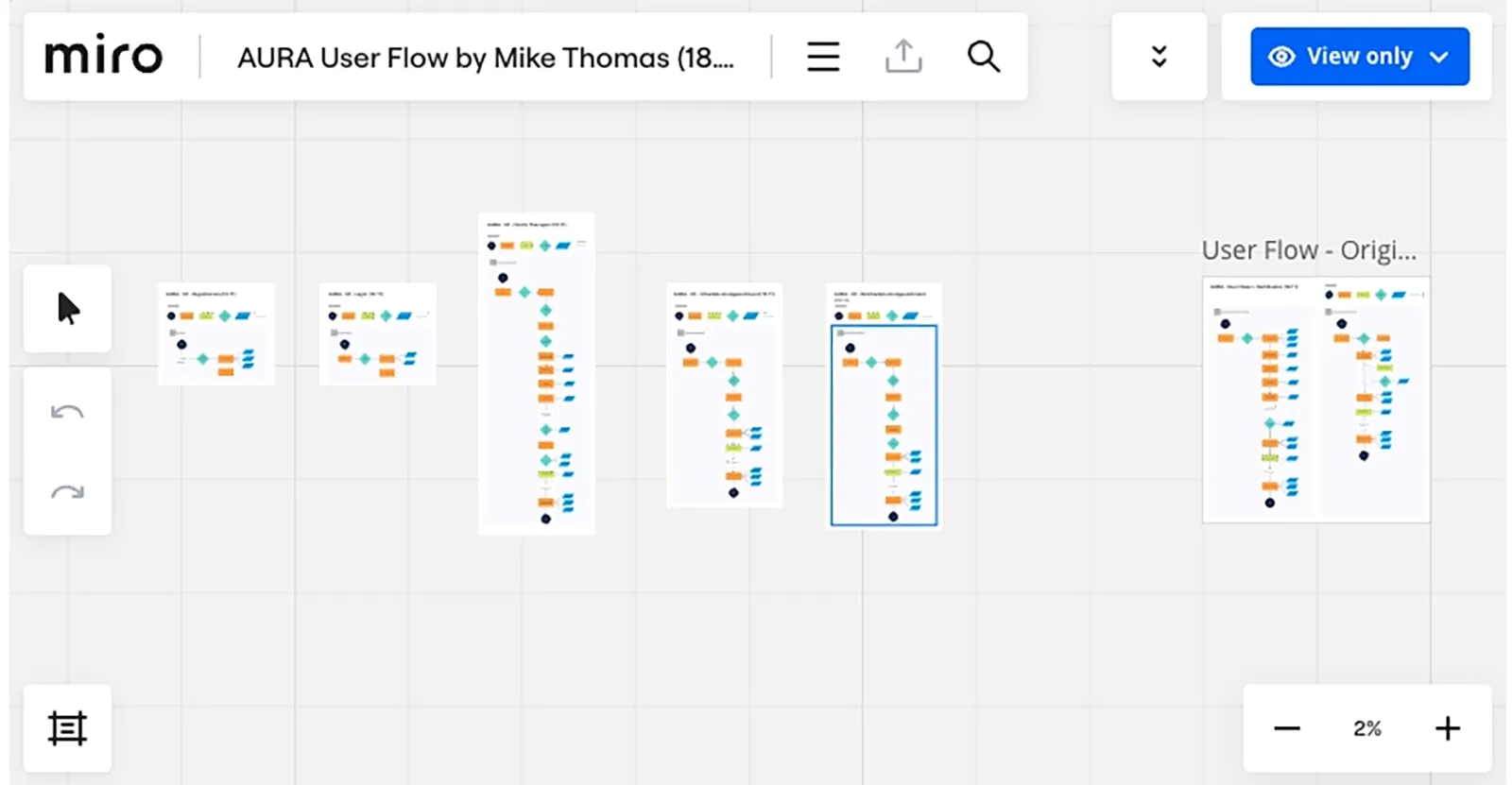
See Miro User Flows: Here
Prototyping & Usability Testing
Low Fidelity Prototype
Through Marvel and Figma, I created a low-fidelity prototype, which were tested in two phases to gather iterative feedback.
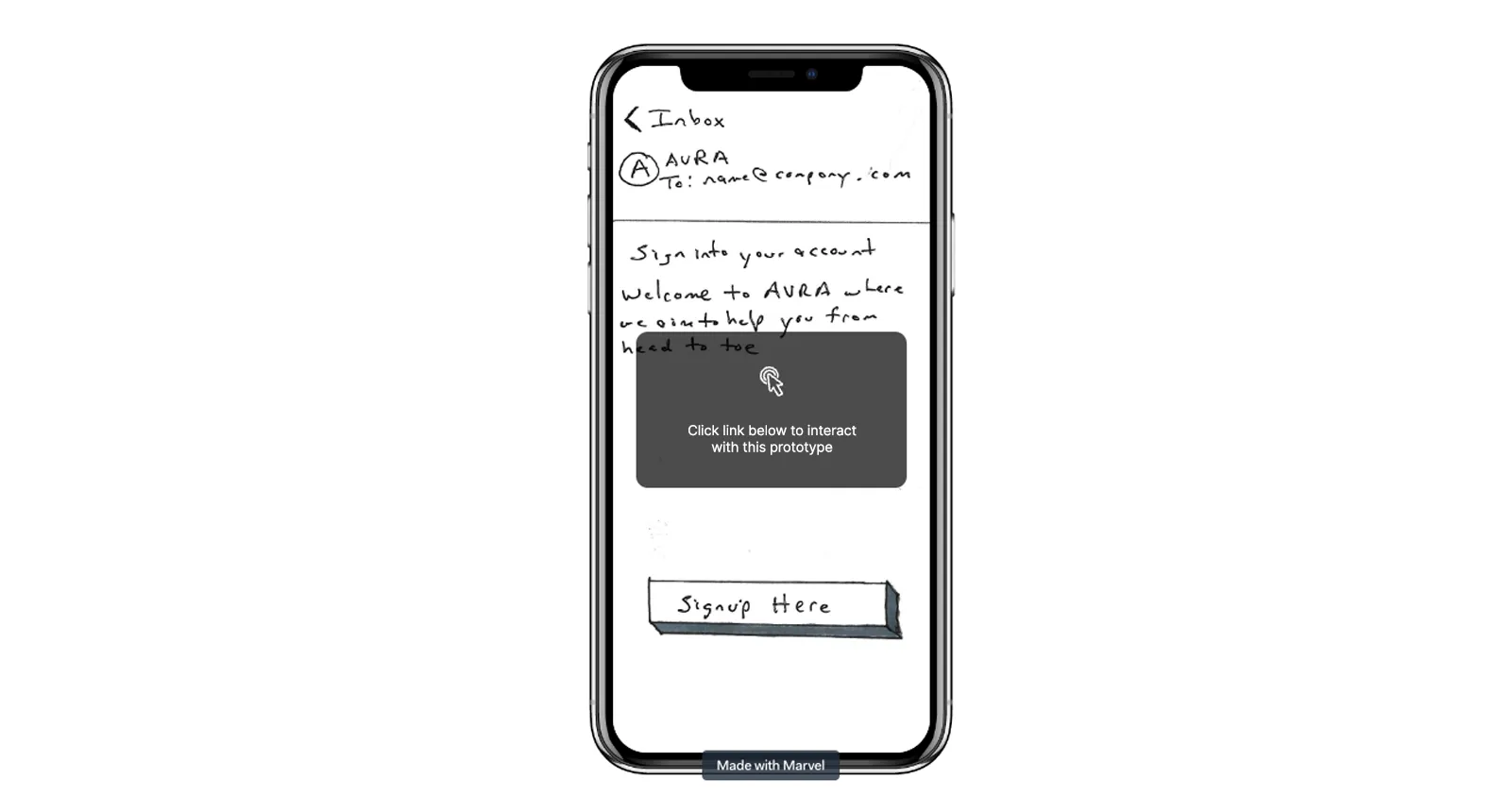
Interact with Marvel Prototype: Here
Prototype V1
Then I created a high fidelity version. The first round revealed spacing issues and a need for clearer UI hierarchies. Key changes included adjusting the grid size and simplifying screen layouts to enhance focus on primary actions.
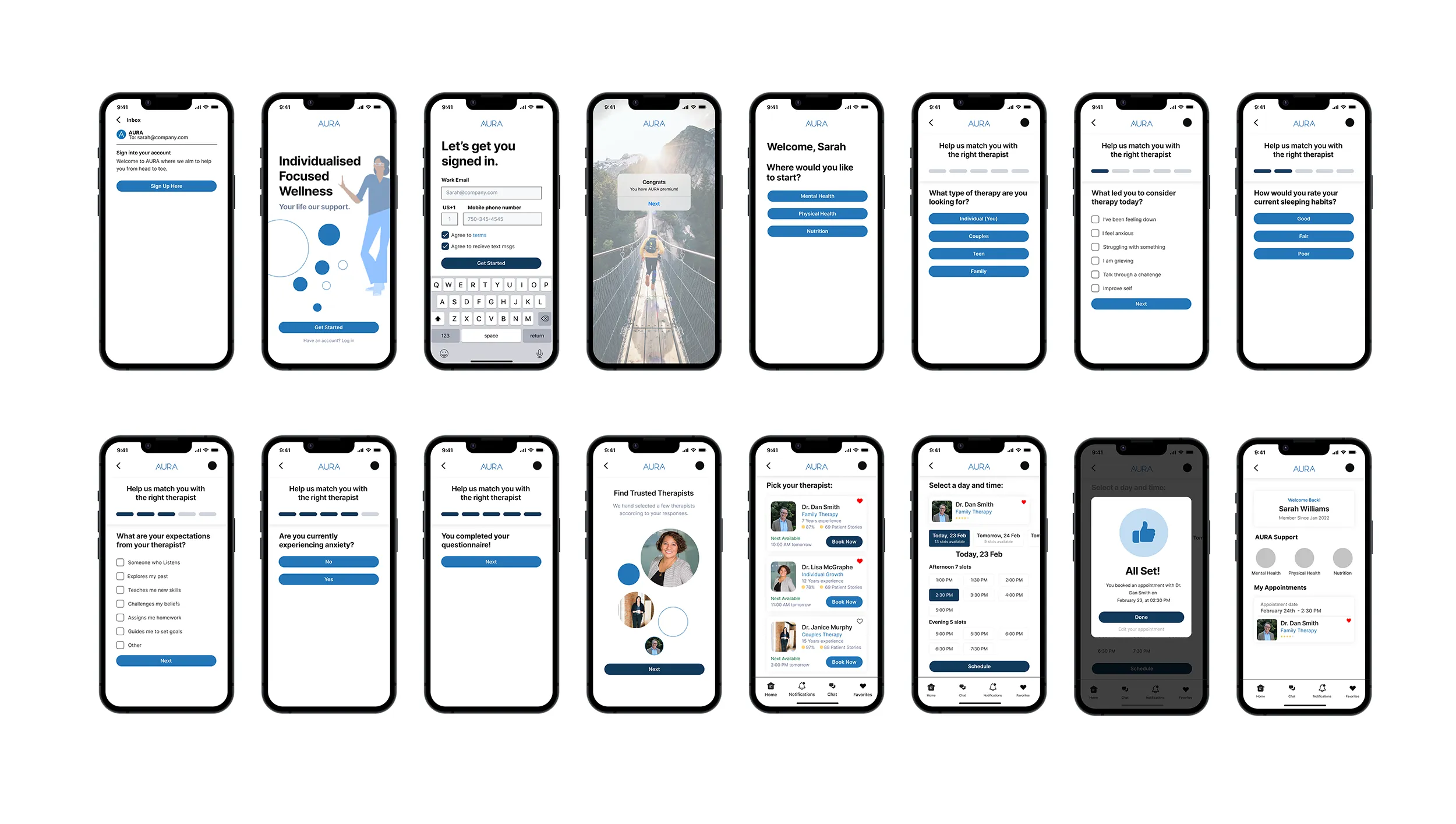
Interact with V1 prototype: Figma
Prototype V2
With feedback integrated, the second round showed smoother user navigation and greater comfort with the interface. This phase validated that the refinements improved flow and reduced hesitation among test users.
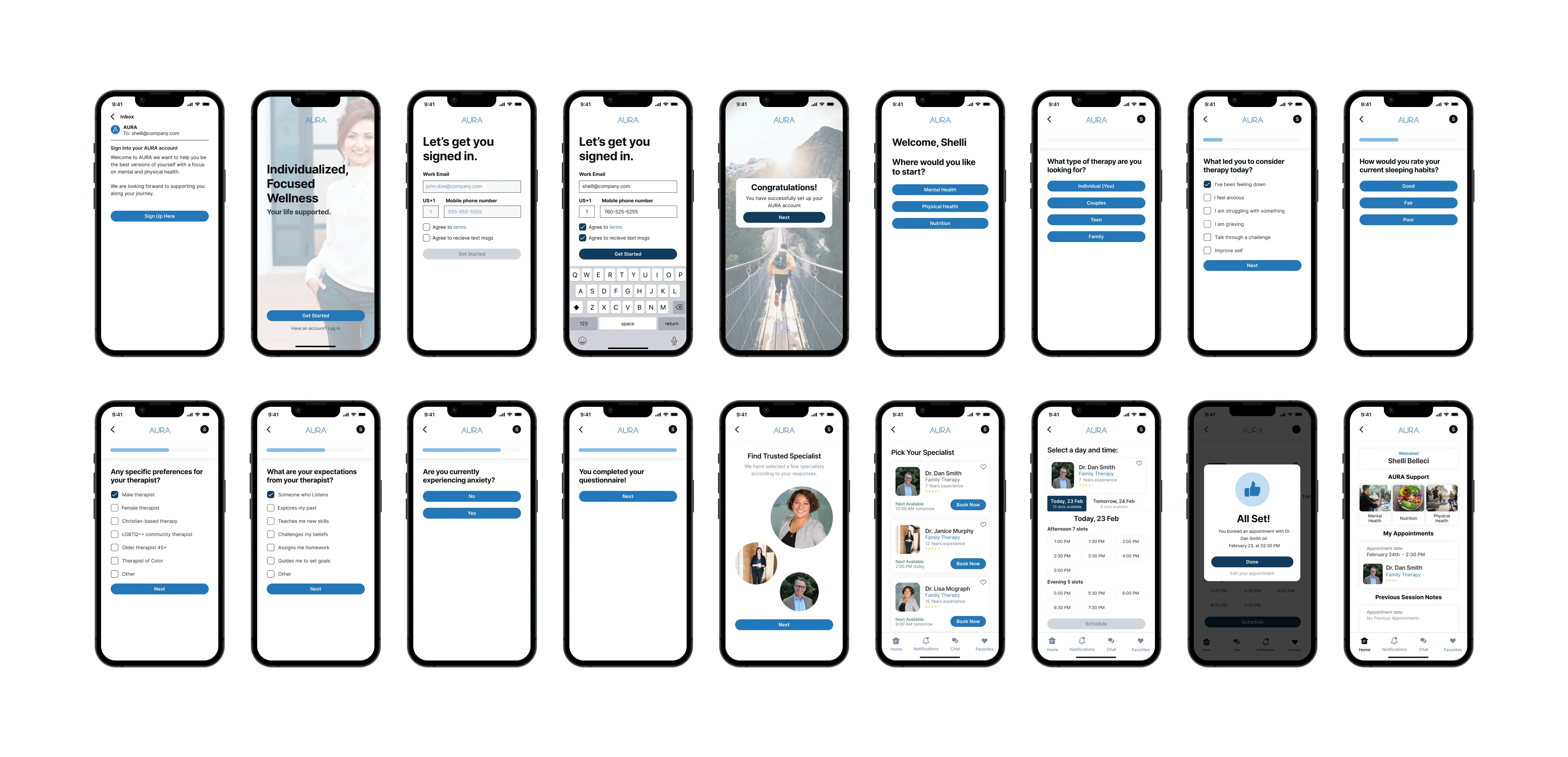
Interact with V2 prototype: Figma
Outcome: The app’s intuitive design, coupled with focused mental health resources, was well-received, establishing a foundation for future enhancements in physical health and dietary features.
Style Guide & Design System
To ensure consistency across AURA’s components, I developed a style guide and basic design system, incorporating colors, typography, icons, and common UI elements such as buttons and forms. The style guide communicated AURA’s brand identity—a supportive, open-minded team focused on empowerment and wellness. This system enabled efficient updates and allowed for potential scalability as the app expands.
Style Guide
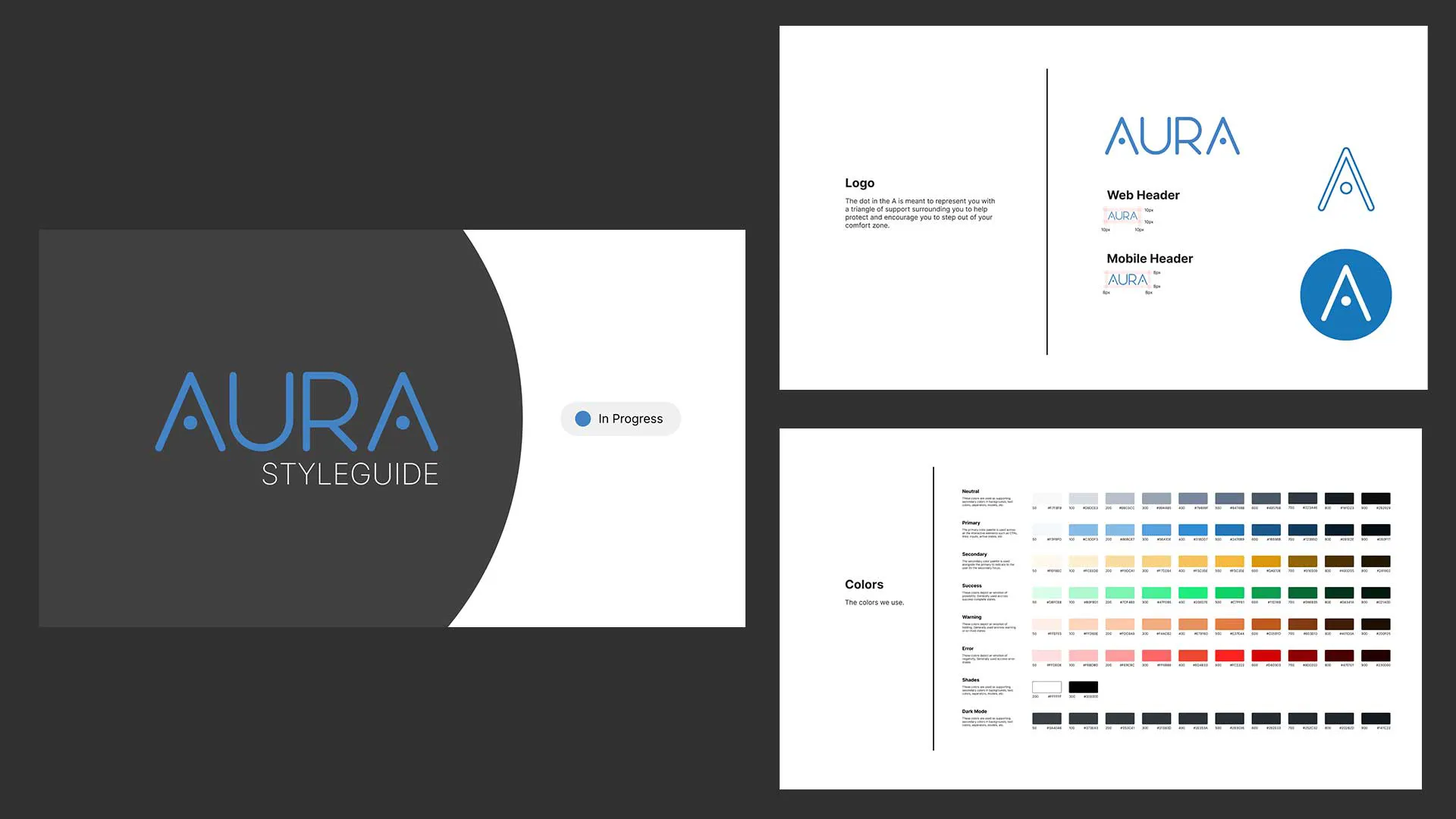
See Styleguide: Figma
Design System
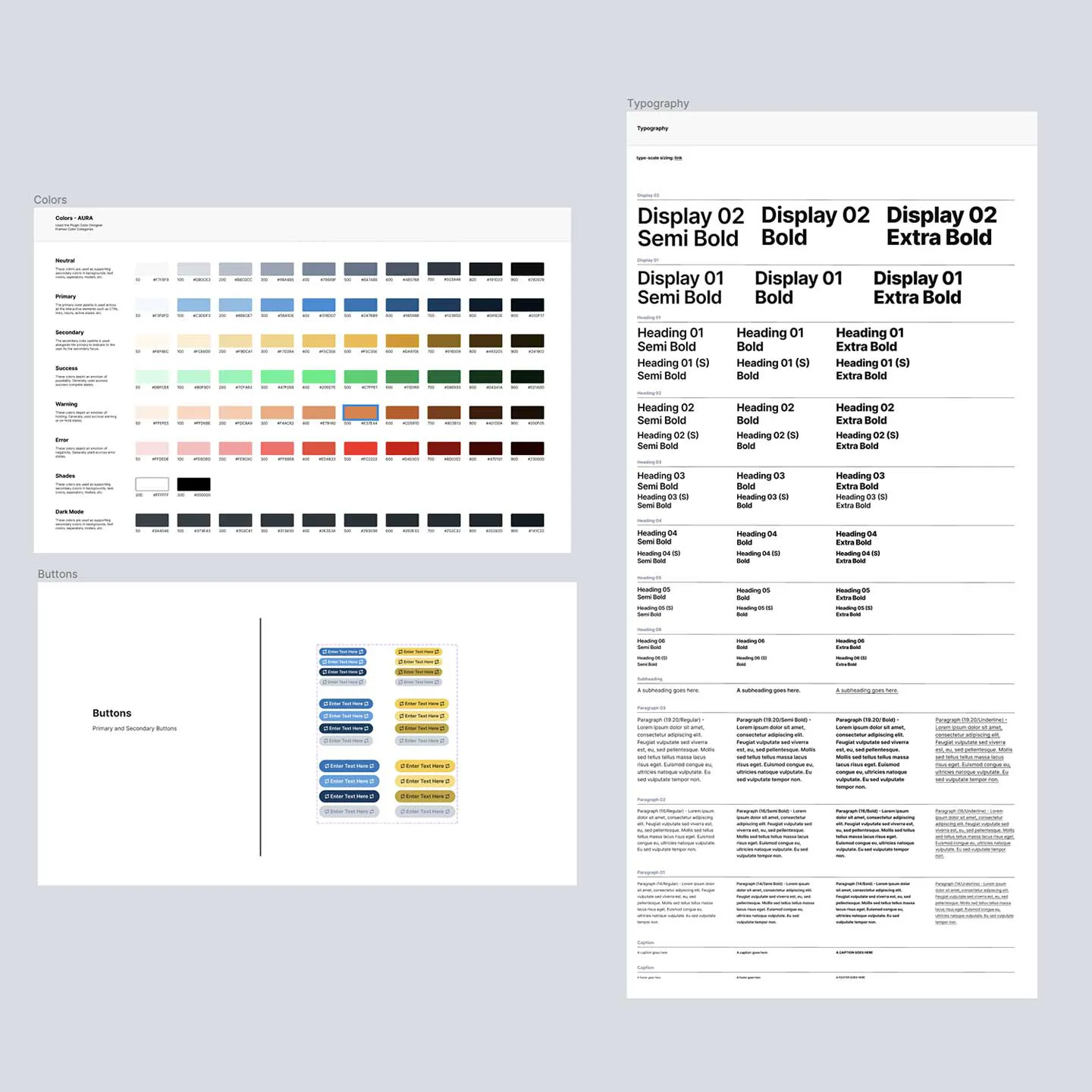
See Design System: Figma
Final Insights & Reflections
What I Learned
My initial assumption was that physical health would be the priority; however, the overwhelming emphasis on mental well-being reshaped the app’s focus and my understanding of employee wellness. The iterative process also underscored the importance of user feedback in refining emotional resonance and accessibility.
Why This Matters
This project demonstrated the potential of a dedicated wellness app in promoting a healthier, more resilient workforce. I realized that beyond the technology, true impact requires a holistic approach, combining digital tools like AURA with organizational support, educational resources, and a compassionate workplace culture.
“Mike impressed me with his ability to adapt in a challenging space, applying user feedback effectively to create a resonant user experience.”
— Morgane Peng, Springboard Mentor Feedback
In Summary
The AURA Wellness App case study represents a journey from empathy-driven research to a thoughtfully crafted product, aligning with IQVIA’s mission to enhance well-being through data-driven solutions. With an understanding of user needs, strategic design principles, and an adaptable approach, AURA offers a scalable model that supports workplace wellness while promoting a balanced, fulfilling life for employees.